

Schweizer 2-33/2-22 TG-4 Sailplane
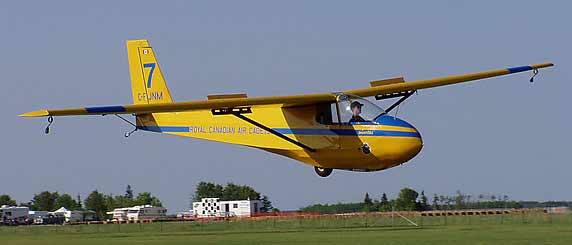
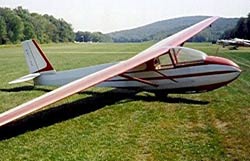
In the 1960s the Schweizer Aircraft Corporation designed and manufactured its line of most popular gliders, including the SGS 2-33, which to this day is the most popular training glider in use in the United States. Because it is easy to fly, of simple construction, and quite rugged and forgiving of a lot of abuse, it serves its role as a trainer very well. The 2-33 was adopted by the United States Air Force Academy as the TG-4, for use in introductory airmanship training. The Academy used over a dozen such gliders until 2002 when they were replaced by more modern sailplanes.
Other popular Schweizer gliders include the single-seat SGS 1-26 and the high-performance 2-32, both of which can be found in many soaring clubs and in private ownership across the country.
Thanks for the LPW glider. The 2-33 is a classic glider build in the USA and is still used as a primary trainer in many soaring clubs across the country. My soaring club owns 2 of them. Would really like to have that model soon... Mike Vance
Schweizer 2-33
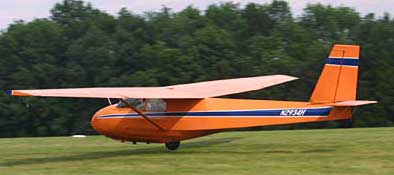 The 2-33 was designed to succeed the 2-22 as something a little
plusher and better performing, thereby making it easier to attract
new students into soaring. The prototype 2-33 first flew in
1965 and volume production began in 1967. For the best part
of the following 20 years, 2-33?s were mainstays in U.S. glider
pilot training. It has an all-metal wing structure and steel
tube fuselage with moving tail surfaces covered in Ceconite
fabric. The spoilers are aerodynamically balanced. The A model,
introduced in 1968, has a larger rudder. Subsequent minor offered
as an FAA-approved homebuilders kit. The U.S. Air Force Academy
operates 13 as the TG-4A. ATC.
The 2-33 was designed to succeed the 2-22 as something a little
plusher and better performing, thereby making it easier to attract
new students into soaring. The prototype 2-33 first flew in
1965 and volume production began in 1967. For the best part
of the following 20 years, 2-33?s were mainstays in U.S. glider
pilot training. It has an all-metal wing structure and steel
tube fuselage with moving tail surfaces covered in Ceconite
fabric. The spoilers are aerodynamically balanced. The A model,
introduced in 1968, has a larger rudder. Subsequent minor offered
as an FAA-approved homebuilders kit. The U.S. Air Force Academy
operates 13 as the TG-4A. ATC.
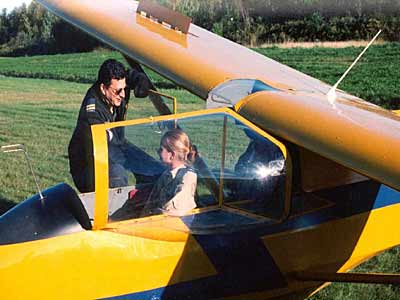
The Schweizer 2-33 is a conventional two-place "tandem intermediate training" glider manufactured by Schweizer Aircraft Corporation in Elmira, New York. Its construction is all metal with a fabric cover on the fuselage and tail surfaces. It has a one-piece canopy for increased visibility. The wings are tapered in the outboard section and have spoilers/dive brakes incorporated.
The Schweizer SGS 2-33 was first introduced in November 1966, although it looks as if it were designed 30 years earlier. Despite the age of it's design, the 2-33 is still the most popular glider for primary training in the United States. Well, perhaps popular isn't the best word, but there are a lot of them. Although it lacks the sleek lines, comfort and performance of modern fiberglass sailplanes, the 2-33 has the right stuff for a trainer; easy to fly, forgiving handling characteristics, and sturdy construction that can withstand the abuse of students. The 2-33 is one of the few equipped with a CG hook for winch launches.
The three Schweizer brothers, Ernest, Paul and Willi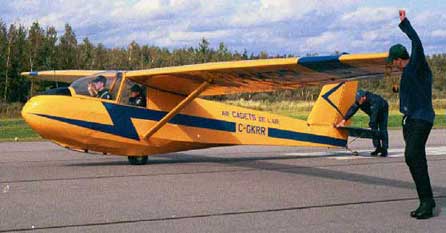 am,
were convinced that the future of sailplanes was in all-metal
construction. They had great success with their SGS
2 - 8, 29 better known as the TG - 2. It had broken soaring
records in 1940 and then was adopted and manufactured in quantity
for military training. It had a welded steel tube fuselage,
fabric covered, with aluminum alloy wings. They had built
the SGS 2 - 12 (TG - 3) with wooden wings only because they
were officially instructed to do so during the wartime of
shortage of aircraft alloys.
am,
were convinced that the future of sailplanes was in all-metal
construction. They had great success with their SGS
2 - 8, 29 better known as the TG - 2. It had broken soaring
records in 1940 and then was adopted and manufactured in quantity
for military training. It had a welded steel tube fuselage,
fabric covered, with aluminum alloy wings. They had built
the SGS 2 - 12 (TG - 3) with wooden wings only because they
were officially instructed to do so during the wartime of
shortage of aircraft alloys.
Post war, they hoped for a rapid growth in the soaring movement and believed there was an urgent need for some robust two-seat trainers. The TG - 2 had never really been intended for this role. It was a sailplane for performance and the rear pilot was not in a good position to act as instructor.
The TG - 3 was better in this respect but it had always been a military glider and had a very limited soaring performance. Something entirely new was required and Ernie Schweizer, the oldest of the three, began on the design in 1945. The prototype flew in early February 1946.
The 2 - 22 had a high wing with strut bracing, the steel tube, fabric covered fuselage having a triangular cross section aft of the wing. The tail unit was also fabricated in light steel tubing. The wing was all light alloy, sheet covered ahead of the spar and fabric covered behind.
The seats were in tandem, the front cockpit, for the pupil, enclosed by a transparent windscreen and sidepieces. The rear cockpit, under the leading edge of the wing, was not enclosed at all. The instructor could thus lean slightly to either side and see directly ahead. The view upward from this position was obstructed by the wing. The instructor had to get into place before the pupil, clambering in over the cockpit side with the help of the step provided. The pupil could then climb in and close the cockpit canopy.
All the preliminary test flights went well except that the 2 - 22 seemed incapable of spinning, even when ballast was added to the tail to move the center of gravity well beyond the normal aft limits. Yet to demonstrate that recovery from a spin was possible, was part of the FAA requirements before type approval could be granted. The rudder stops were repositioned allowing the sailplane to be forced into a spin that was demonstrable.
After this the rudder stops were put back to their original position. The Schweizer's felt it safer to teach student pilots first in a sailplane which would not spin. They could be transferred later, perhaps to one of the old ex-military aircraft, for this part of their training.
 Apart from having all the characteristics required of a safe
trainer, the 2 - 22 climbed readily in thermals because of
its low wing loading. It was suitable for winch launching
but, increasingly, the practice in the USA was for all launches
to be by aircraft tow. The 2 - 22 was well suited to this.
Apart from having all the characteristics required of a safe
trainer, the 2 - 22 climbed readily in thermals because of
its low wing loading. It was suitable for winch launching
but, increasingly, the practice in the USA was for all launches
to be by aircraft tow. The 2 - 22 was well suited to this.
Production began in May 1946. Sales were not at first very rapid. Despite their limitations, ex-military sailplanes were available at a third of the cost of the 2 - 22. Not till 1957 did the total production of the 2-22 exceed fifty.
The 2 - 22A, which was designed in response to a requirement of the Air Force Academy, had improvements including a fully enclosed rear cockpit with a side door for access. The 2 -22C, for the civilian clubs, had ailerons of narrower chord to reduce the stick forces, and kits were offered. Seventy-five plus twenty-two kits were sold and thirty were delivered to the Indonesian Air Force.
Further changes, including a new, molded canopy and increased area of transparency for the instructor, improving the view upwards, resulted in the 2 - 22E of 1963. Of this eighty-seven were built with twenty-two kits, before production ceased in 1967. The replacement was the SGS 2 - 33.
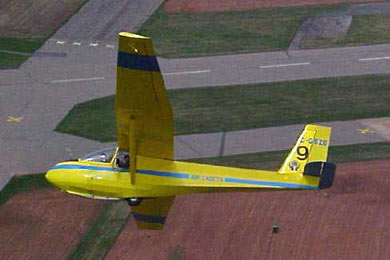
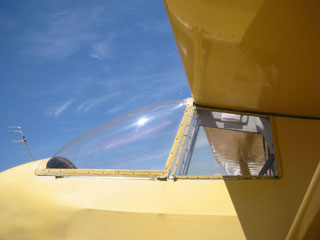 Schweizer 22-33: Structure: all metal with fabric-covered steel-tube fuselage, metal-covered wings, and fabric covered tail surfaces |
|
 |
|
Specifications
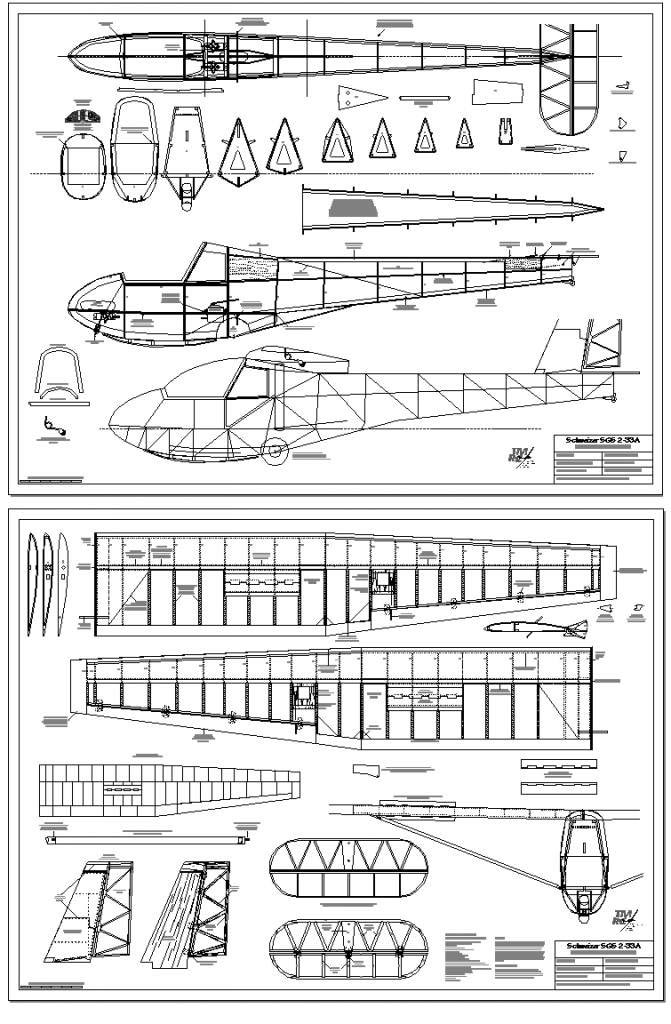 |
Crew: Two Length: 25 ft 9 in Wingspan: 51 ft Height: 9 ft 3.4 in Wing area: 219.48 ft² Aspect ratio: 11.85:1 Wing profile: NACA 63(3)-618 Empty weight: 600 lb Gross weight: 1,040 lb Performance Maximum speed: 98 mph Maximum glide ratio: 22.25 at 52 mph Rate of sink: 168 ft/min |
Type: Schweizer 2-33
Glider C-FEAF
After becoming established on final at 350', the IP and student experienced the sensation of hanging in their harness straps as the glider was observed to go below the normal glide slope. It was likely that this sensation and corresponding increased rate of descent was affected by some mechanical turbulence caused by a large stand of trees on the final approach path.
|
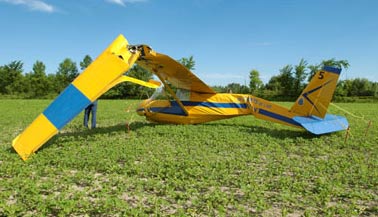 Region Gliding School. Both occupants suffered minor injuries
while the glider suffered "A" category damage.
Region Gliding School. Both occupants suffered minor injuries
while the glider suffered "A" category damage.