

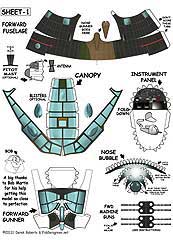
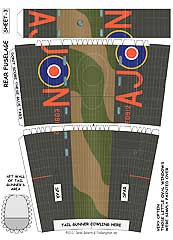
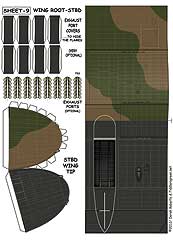
Avro Lancaster - $$20.00
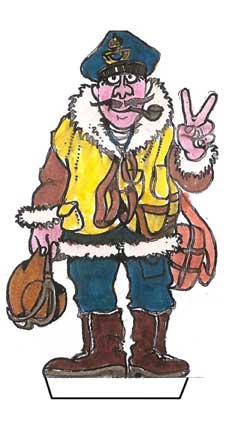
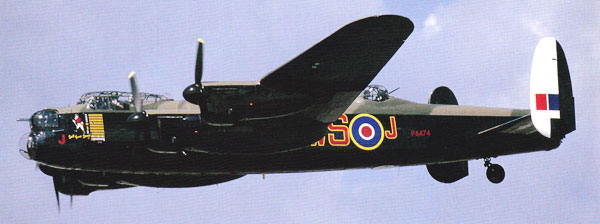
The Avro Lancaster was a British WWII heavy bomber made initially by Avro for the RAF. It first saw active service in 1942, and together with the Handley Page Halifax it was one of the main heavy bombers of the RAF, the RCAF and squadrons from other Commonwealth and European countries. 22 Sheets. SEVERAL Derek Carter cartoons

Avro Lancaster British Dam Buster Bomber
 Faced with a dire situation during the summer of 1940, British Prime Minister Winston Churchill threw his support behind the defensive power of the Royal Air Force's Fighter Command and the development of Bomber Command with the words: The Fighters are our salvation, but the Bombers alone provide the means of victory." This is a downloadable cardmodel of the legendary Avro Lancaster |
 |
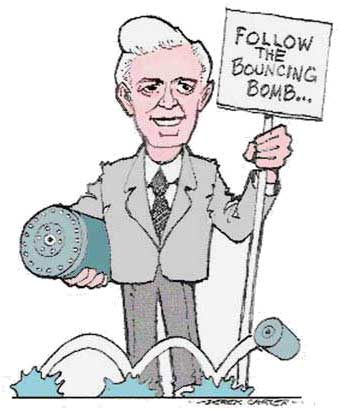
| Model Updates: May 8: Added scales and WSAM/ Added cutout of Sir Barnes Wallace May 12: Reduced the size of the lower fuselage shroud beneath Tail Gunner. SHEET 7 on large -(sheet-2 reg) also, SHEET 4 LARGE minor spelling error. Better bookmark this page and check back before downloading & building May 12: Sheet 11 (starboard wing) had a little canvas size issue and that shouldn't matter. Fixed anyway May 28: minor graphic changes to fuselage-Large and reg |
Avro Lancaster WWII Dam Buster
 The Avro Lancaster became Great Britain's most famous
four-engine bomber during World War II. It was developed
from the ill-fated Manchester that suffered from unreliable
Rolls-Royce Vulture engines. Even while the Manchester
was being produced, the Avro design team, led by Chief
Designer Roy Chadwick, investigated a possible four-engine
replacement. The proposed four-engine Manchester Mk III,
powered by Rolls Royce Merlin XX engines, was discussed
with the Air Ministry on February 20, 1940. At first the proposal
created little interest because most of the Merlin engine
production was needed for Hurricane and Spitfire fighter
aircraft. However in July 1940 the Air Ministry requested Avro
to go ahead with their project and use as many Manchester
components as possible in the new design.
The Avro Lancaster became Great Britain's most famous
four-engine bomber during World War II. It was developed
from the ill-fated Manchester that suffered from unreliable
Rolls-Royce Vulture engines. Even while the Manchester
was being produced, the Avro design team, led by Chief
Designer Roy Chadwick, investigated a possible four-engine
replacement. The proposed four-engine Manchester Mk III,
powered by Rolls Royce Merlin XX engines, was discussed
with the Air Ministry on February 20, 1940. At first the proposal
created little interest because most of the Merlin engine
production was needed for Hurricane and Spitfire fighter
aircraft. However in July 1940 the Air Ministry requested Avro
to go ahead with their project and use as many Manchester
components as possible in the new design.
Manchester airframe BT308 was designated project No.683
and fitted with four Rolls-Royce Merlin X engines on extended
wings. This prototype model first flew on January 9, 1941
with the Manchester's triple tail fins but without ventral and
dorsal turrets.
While the early handling trials were successful, a change
in the tail configuration was recommended, and the original
type of vertical tail surfaces were replaced by larger endplate
surfaces on a wider-span tail-plane with the large central
fin deleted. Exhaustive flying tests followed, and the now
renamed Lancaster soon revealed its potential with excellent
performances. The first production model prototype DG595
flew on May 13,1941, and was later flown to Boscombe
Down for service trials.
On June 6, 1941 , Avro received a contract for 454 Lancaster
Mk 1's powered by four Merlin XX engines, plus two 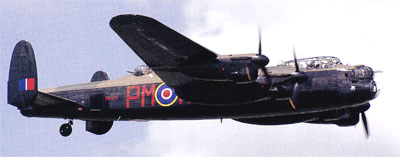 prototype
Lancaster Mk IIs fitted with four Bristol Hercules VI engines.
prototype
Lancaster Mk IIs fitted with four Bristol Hercules VI engines.
On Christmas Eve, 1941, No.44 (Rhodesia) Squadron based
at RAF Waddington in Lincolnshire received the first three
production Lancaster Mk 1's. The first operation with the
Lancaster was carried out on March 3, 1942, when four
aircraft of No.44 Squadron were detailed to lay mines in the
Heligoland Bight. The Lancasters took off from Waddington
at 18:15 hours and all returned safely five hours later.
The early-production Lancasters had a maximum gross take-off weight of 63,000 lb and carried a variable bomb load up to a maximum of 14,000 lb. The bomb load mix depended upon the type of target to be attacked. For example, the bomb load for the demolition of industrial sites by blast and fire was code named "Cookie Plumduff" and this consisted of 1 x 4000 lb, 3 x 1000 lb, plus up to six small bomb carriers loaded with 4 lb or 30 lb incendiaries. Later, heavier bomb loads would be carried, such as the 8000 lb Cookie, the 12,000 lb Tallboy and finally the 22,000 lb Grand Slam. The defensive armament consisted of a two-gun power turret fitted in the nose and mid-upper position plus a four-gun turret in the tai
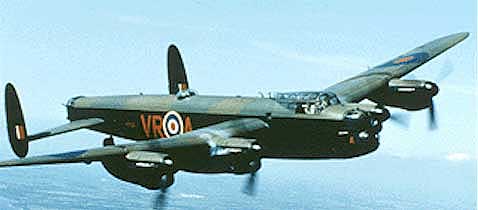 In February 1942 Air Chief Marshal Sir Arthur Harris became
head of Bomber Command and prioritized the production of
four-engine aircraft for his bomber force. Manufacturing
capacity was increased by Avro but Rolls-Royce became
concerned that they would not be able to satisfy the ever-
increasing demand for the Merlin engines. This situation had
been foreseen, and one alternative was to use a different
engine - the Lancaster Mk II using the Bristol Hercules was
already in the pipeline with an order for 300 placed with
Armstrong Whitworth. The second solution was for the Packard
Motor Corporation to manufacture the Merlin engine in the USA.
In February 1942 Air Chief Marshal Sir Arthur Harris became
head of Bomber Command and prioritized the production of
four-engine aircraft for his bomber force. Manufacturing
capacity was increased by Avro but Rolls-Royce became
concerned that they would not be able to satisfy the ever-
increasing demand for the Merlin engines. This situation had
been foreseen, and one alternative was to use a different
engine - the Lancaster Mk II using the Bristol Hercules was
already in the pipeline with an order for 300 placed with
Armstrong Whitworth. The second solution was for the Packard
Motor Corporation to manufacture the Merlin engine in the USA.
The first Lancaster Mk III powered by the Packard Merlin 28s came off the Avro production lines in August 1942. Although the Packard Merlin-powered Lancaster had almost identical performance to the Mk I, it was given the new designation because of different servicing requirements. The Packard Corporation also shipped Merlins over the Canadian border where the Victory Aircraft Company built 430 Lancaster Mk X aircraft.
With the deployment of the Mk III, a total of 7377 Lancasters were built between October 1941 and October 1945, equipping 57 RAF Bomber Command Squadrons by the end of World War ll.
The DamBusters
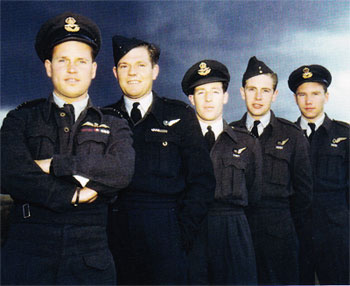 |
Guy Gibson, and crew who bombed Mohne Dam. |
No. 617 Squadron, the most famous squadron in the Royal
Air Force, was formed at Scampton on March 21, 1943,
under the command of Wing Commander Guy Gibson. An
outstanding pilot and leader, Gibson was allowed to have his
pick of crews from 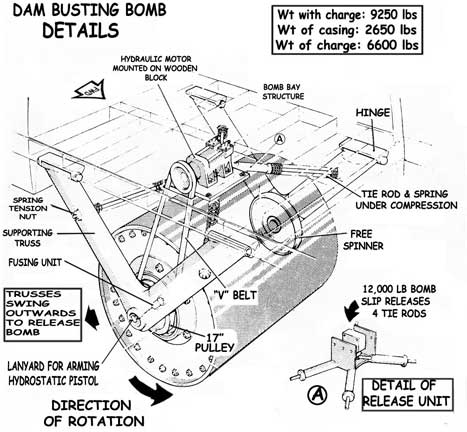 other squadrons to fly Lancasters on a
special, highly-secret operation. Gibson himself was not told
for some weeks that Operation Chastise, codename for the
dams raids, involved breaching the Mohne, Eder and Sorpe
Dams which held back more than 300 million tons of water
vitally important to German industry.
other squadrons to fly Lancasters on a
special, highly-secret operation. Gibson himself was not told
for some weeks that Operation Chastise, codename for the
dams raids, involved breaching the Mohne, Eder and Sorpe
Dams which held back more than 300 million tons of water
vitally important to German industry.
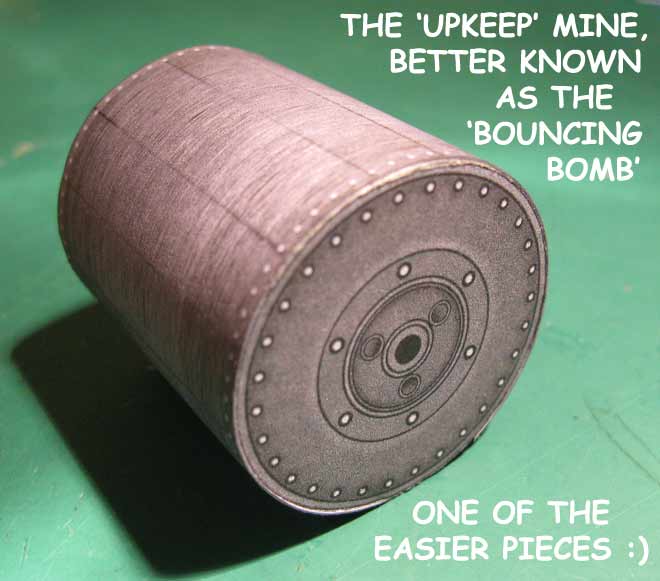
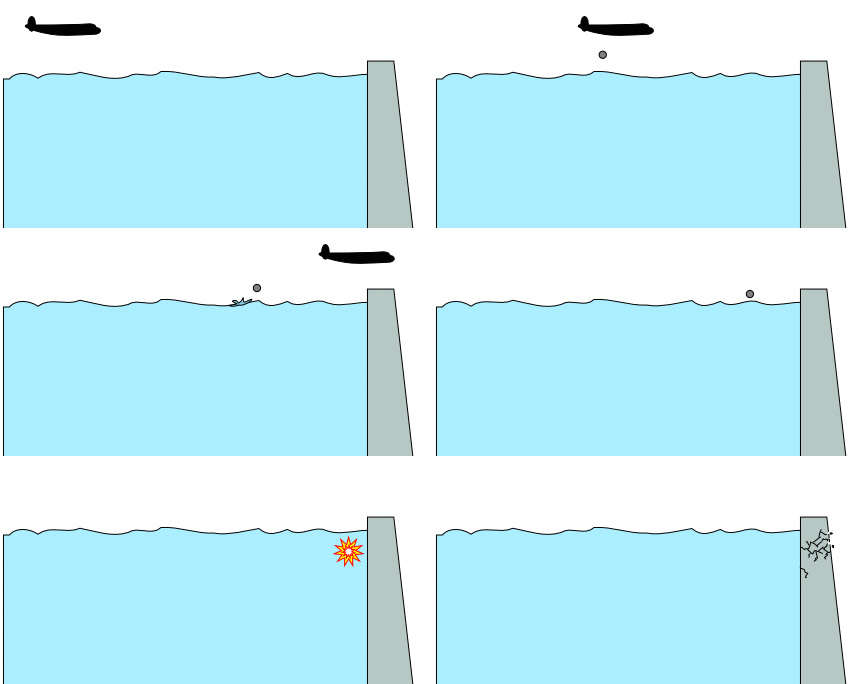
This secret mission required a special bomb which had to be delivered in a highly unusual manner. The bomb had to be spun in the bomb bay of the aircraft at 500 rpm so that when it hit the water it would "skip" across the surface rather than sink. The crew had to release the bomb while flying exactly 60ft above the water at a speed of exactly 220 mph. The bomb also had to impact the water at exactly 425 yd from the dam wall and only a 6 per cent deviation was permissible. The targets under attack were heavily defended, and the raids had to take place at night.
The first Lancaster took off from Scampton shortly before 21:30 hours on May 16, 1943, and Wing Commander Gibson's aircraft, the first to attack the Mohne Dam, released its mine at 28 minutes past midnight. Half an hour later, just after the fifth Lancaster had attacked, Gibson radioed England with the news that the dam had been breached. The remaining aircraft of the Mohne formation then flew on to the Eder Dam. The first two mines failed to breach the dam, but shortly before 2am, when the third Lancaster had attacked, Gibson signaled the codeword "Dinghy", indicating success with the second part of the operation. Other aircraft attacked the Sorpe and Scheme Dams but did not succeed in breaching them. Just how low the Lancasters flew during the attack is shown by the fact that one had to turn back as it had hit the sea and lost its bomb on the journey to mainland Europe.
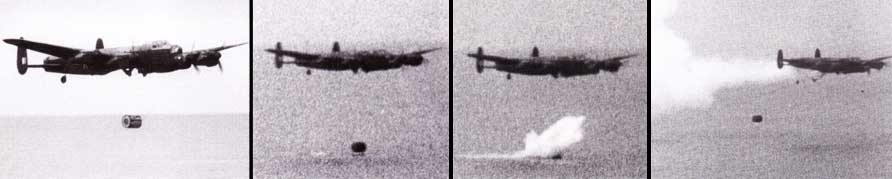
Watch the bomb drop and skip to the dam.
Note that if the Lancs flew any lower, the impact spray would have hit the bomber in the tail
Of the 19 Lancasters which took off for the dams raid
with their 133 crew, eight planes and 56 men did not return.
Five planes crashed or were shot down en route to their
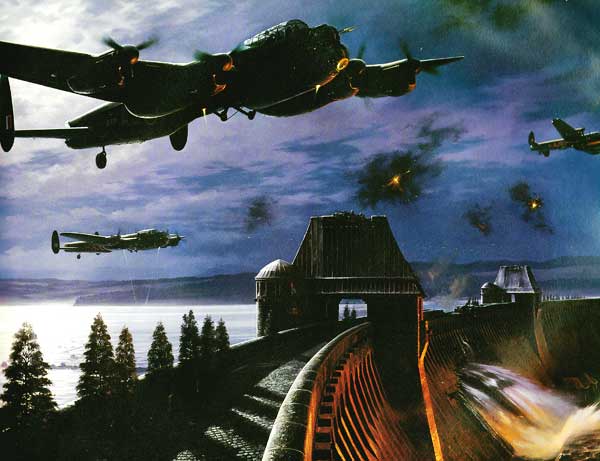 targets. Two were destroyed while delivering their attacks
and another was shot down on the way home. Two more were
so badly damaged that they had to abandon their missions.
No.617 Squadron, known from this time onwards as the
"Dambusters", had become famous.
targets. Two were destroyed while delivering their attacks
and another was shot down on the way home. Two more were
so badly damaged that they had to abandon their missions.
No.617 Squadron, known from this time onwards as the
"Dambusters", had become famous.
The attack had huge propaganda value and made Gibson a national hero. Gibson was awarded the Victoria Cross for bringing round his Lancaster to give covering fire to the Lancasters that were following up his attack on the Mohne Dam. Thirty-one other members of 617 Squadron were also decorated. Severe flooding occurred where the Mohne Dam was breached.
Six small electricity works were damaged and rail lines passing through the Mohne Valley were disrupted. But industrial production was not affected in the long term. When the Eder Dam broke, there were similar results. Kassel, an important arms-producing town, was breached by the flood- water, but little actual damage was done. Had the Sorpe Dam been breached, the damage would have been much greater' The potential for a major disaster was recognized by Albert Speer who commented, "Ruhr production would have suffered the heaviest possible blow."
In the short and long term, the damage done by 617 Squadron
was repaired quite quickly. But the most important impact of
the raid was that 20,000 men working on the Atlantic Wall had
to be moved to the Ruhr to carry out repairs to the damaged
and breached dams. This work was completed before the
rains of the autumn appeared.
 |
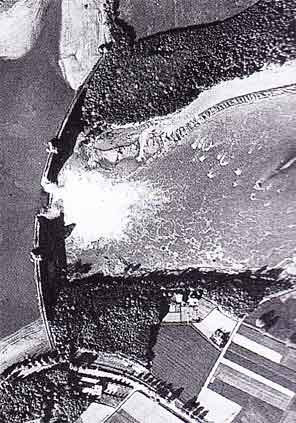 |
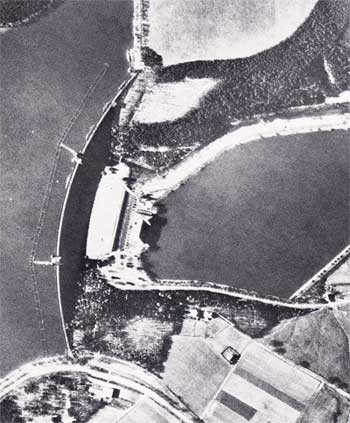
Mohne Dam before the bombing. |
Mohne Dam after the bombing. |
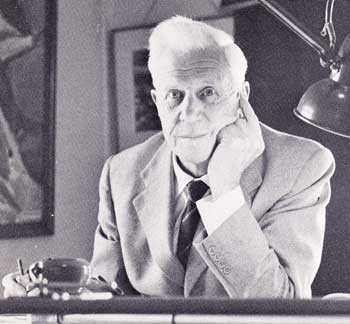 |
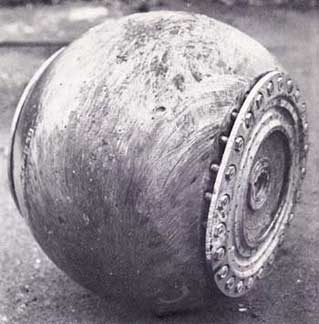 |
Sir Barnes Wallis, the man who designed the "Damn Buster" bomb, is pictured here demonstrating his Finger Phone invention |
A close up of one of the spherical bombs prototypes. |
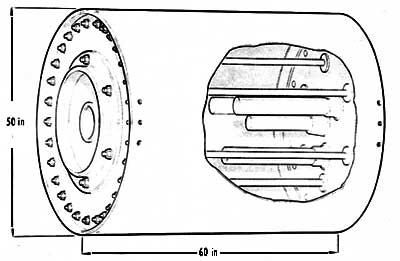 |
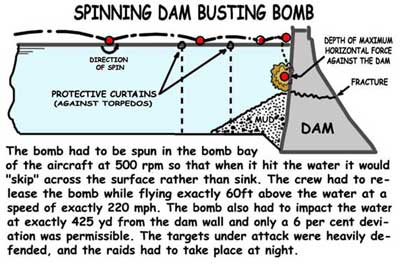 |
A sketch of the Dambuster Bomb. |
THIS is how the bomb worked. |
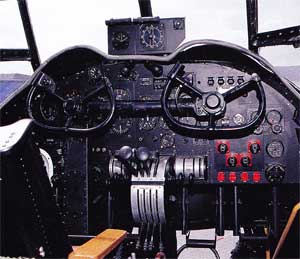 Avro Lancaster Bomber Cockpit. |
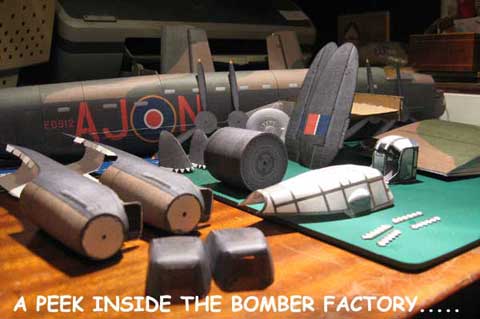
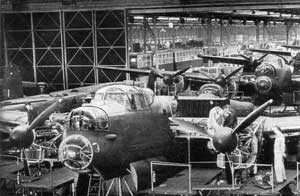 Avro Lancaster Bomber factory.
In Canada they were making one per day in the final days of the war. Many were flown to England and then back to be sold as surplus at about $500 each !! FYI,,This cardmodel cost FG over $3500 |
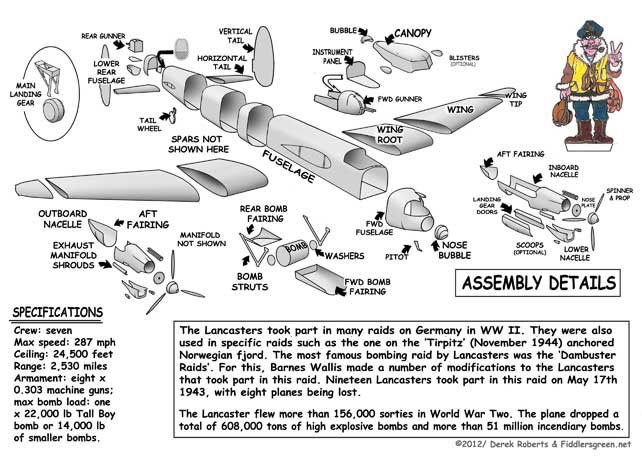 |
There's a full page file of this exploded view of the Lancaster in with the kit |
 |
 |
 |
||
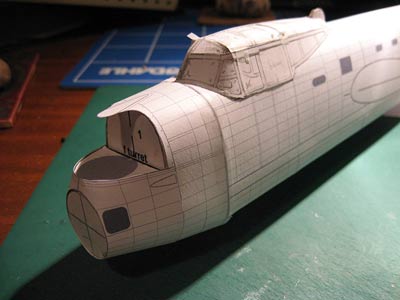
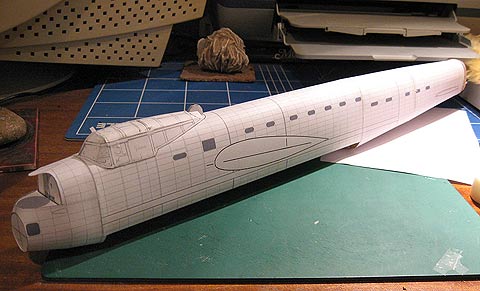
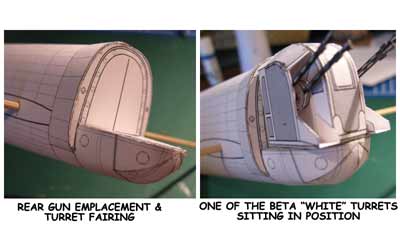
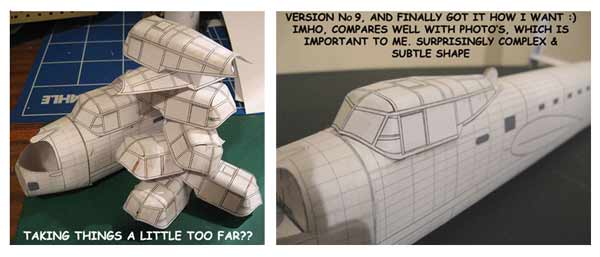
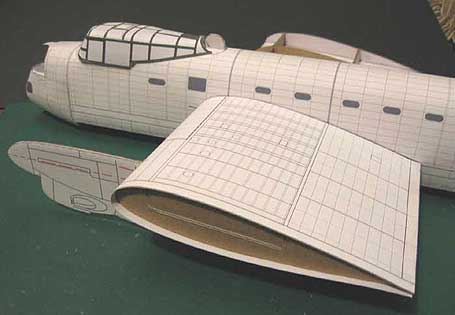
October 23, 2012: One of the biggest headaches (which I am trying to resolve without resorting to fuselage formers) is that, as you can see from the pic, the bottom of the fuselage (the bomb doors) is missing.... so it's kinda hard for the fuse to keep it's shape as the curves are really tight on the bottom (pardon my French) and without that lower section it tends to round out. Oct-26 |
|||
 |
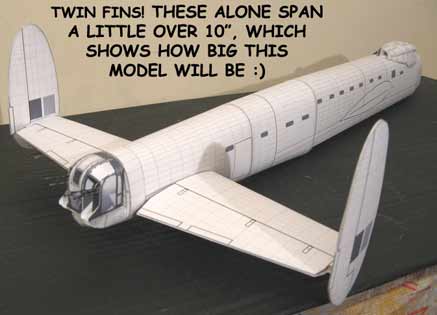
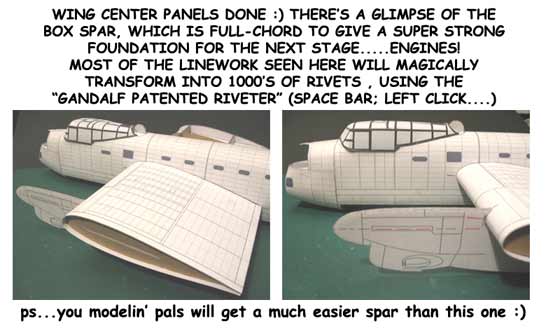
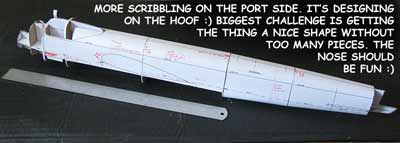 Derek tells us designing the Avro Lancaster took most of 2011 and a good chunk of 2012. Three other designers helped |
||
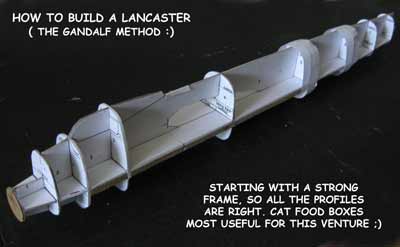
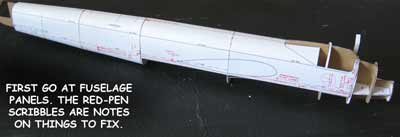 NOTE: Those formers you see were used to help shape the Lancaster's skin during the design stage. |
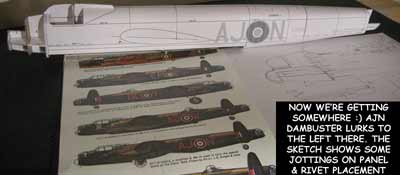 |
||
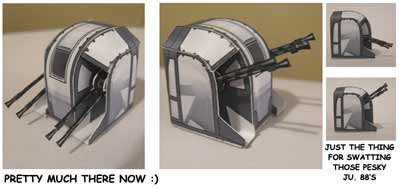 |
 |
||
 |
|||
 |
 |
||
 |
 |
||
  |
|||
  |
|||
|
|||
IMHO..About the funniest ad ever !! must see
Avro Lancaster Specifications
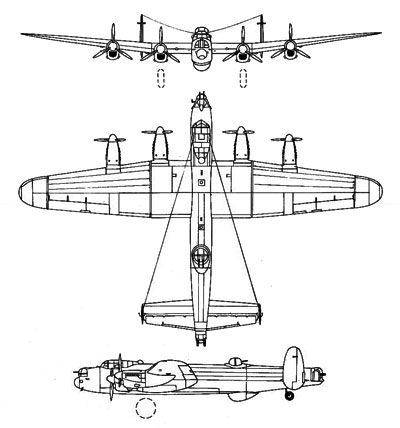 |
Crew: 7: pilot, flight engineer, navigator, bomb aimer, wireless operator, mid-upper & rear gunners Length: 69 ft 5 in Wingspan: 102 ft Height: 19 ft 7 in Wing area: 1,300 ft² Empty weight: 36 828 lb Loaded weight: 63,000 lb Powerplant: 4× Rolls-Royce Merlin XX V12 engines, 1,280 hp each Performance Maximum speed: 280 mph at 15,000 ft Range: 3,000 mi with min bomb load Service ceiling: 23,500 ft Wing loading: 48 lb/ft² Power/mass: 0.082 hp/lb Armament 8× 0.303 in (7.7 mm) Browning machine guns in 3 turrets, with variations Bombs: Maximum normal bomb load of 14,000 lb or 22,000 lb Grand Slam with modifications to bomb bay. |
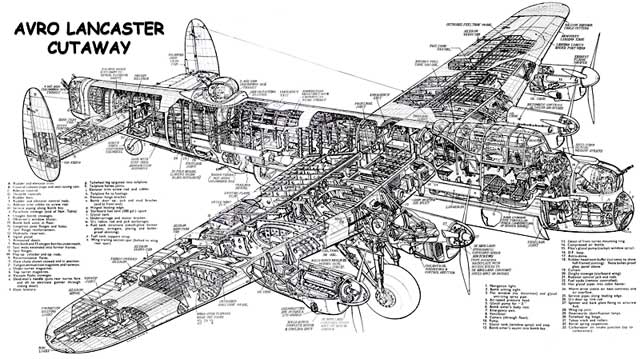 |
This wonderful Lancaster cutaway comes in full size 8.5x11 PDF for FREE included in your MyModels folder! |
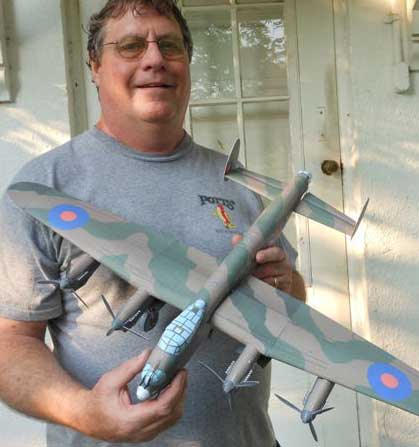 Modeln'Pal 'Trains' showing off HIS Avro Lancs Bomber |
YouTube Videos from Neil Paper Models
Introduction and Plan to Construct the Avro Lancaster
This video is part of a longer series for building the model.
Step-By-Step Tutorial
This video is a Step-By-Step tutorial
 |